Most operations managers, when faced with recurring downtime, look for answers in equipment upgrades, software systems, or process redesigns. These can help. But an honest conversation about conveyor reliability almost always circles back to the same root cause: not having the right specialist on the floor at the right time. The machinery does not fail in a vacuum. It fails because specific warning signs were missed, maintenance intervals were stretched, or a breakdown happened and nobody nearby had the deep, system-specific knowledge to resolve it quickly.
This is precisely why staffing decisions carry so much more operational weight than most leadership teams give them credit for. When your conveyor maintenance program is built around people who truly know these systems, your entire relationship with downtime changes. Not eliminates, but changes in measurable, documentable ways.
At Millwrights4Hire, we have seen this play out across dozens of facilities. The ones that treat millwright placement as a strategic decision rather than a transactional hire tend to run cleaner, faster, and more profitably. Here is why that is, in practical terms.
Most operations managers, when faced with recurring downtime, look for answers in equipment upgrades, software systems, or process redesigns. These can help. But an honest conversation about conveyor reliability almost always circles back to the same root cause: not having the right specialist on the floor at the right time. The machinery does not fail in a vacuum. It fails because specific warning signs were missed, maintenance intervals were stretched, or a breakdown happened and nobody nearby had the deep, system-specific knowledge to resolve it quickly.
This is precisely why staffing decisions carry so much more operational weight than most leadership teams give them credit for. When your conveyor maintenance program is built around people who truly know these systems, your entire relationship with downtime changes. Not eliminates, but changes in measurable, documentable ways.
At Millwrights4Hire, we have seen this play out across dozens of facilities. The ones that treat millwright placement as a strategic decision rather than a transactional hire tend to run cleaner, faster, and more profitably. Here is why that is, in practical terms.
This might be an uncomfortable thing to hear if you have spent the last year investing in new conveyor components, monitoring sensors, or maintenance scheduling software. All of those things matter. But they only work if the person interpreting the data, responding to the alerts, and performing the actual maintenance work has the skill to act on what they are seeing.
Conveyor systems are not simple. They involve precise mechanical relationships between belts, pulleys, idlers, take-ups, drives, and structures, and each of those elements interacts with the others in ways that take years of direct experience to read properly. A generalist maintenance technician who is excellent at electrical troubleshooting or HVAC work may have zero intuitive feel for why a belt is tracking to the left or why a particular motor is running three degrees hotter than it did two weeks ago.
That knowledge gap is where extended downtime is born. It is not the initial breakdown that costs facilities the most money. It is the time spent diagnosing incorrectly, pulling the wrong components, making the wrong adjustments, and essentially learning through trial and error on live equipment while the production clock runs.
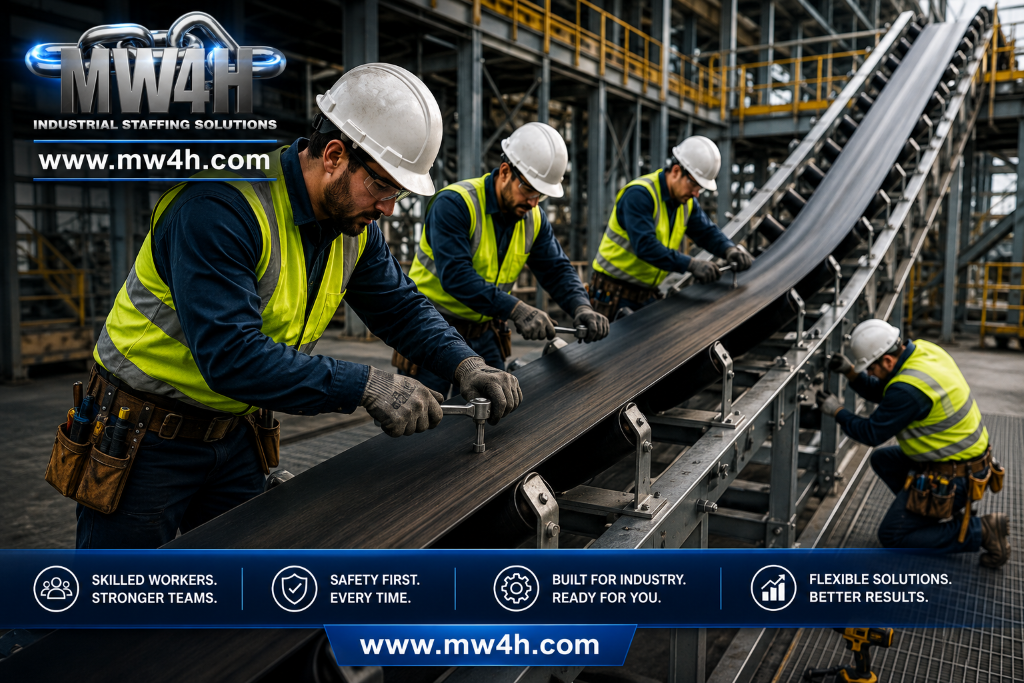
This is the core of why Conveyor Millwright Staffing workers make such a tangible difference in facility uptime numbers. They bring a depth of system-specific knowledge that simply cannot be improvised in the moment by a generalist, no matter how capable that generalist is in other areas of maintenance.
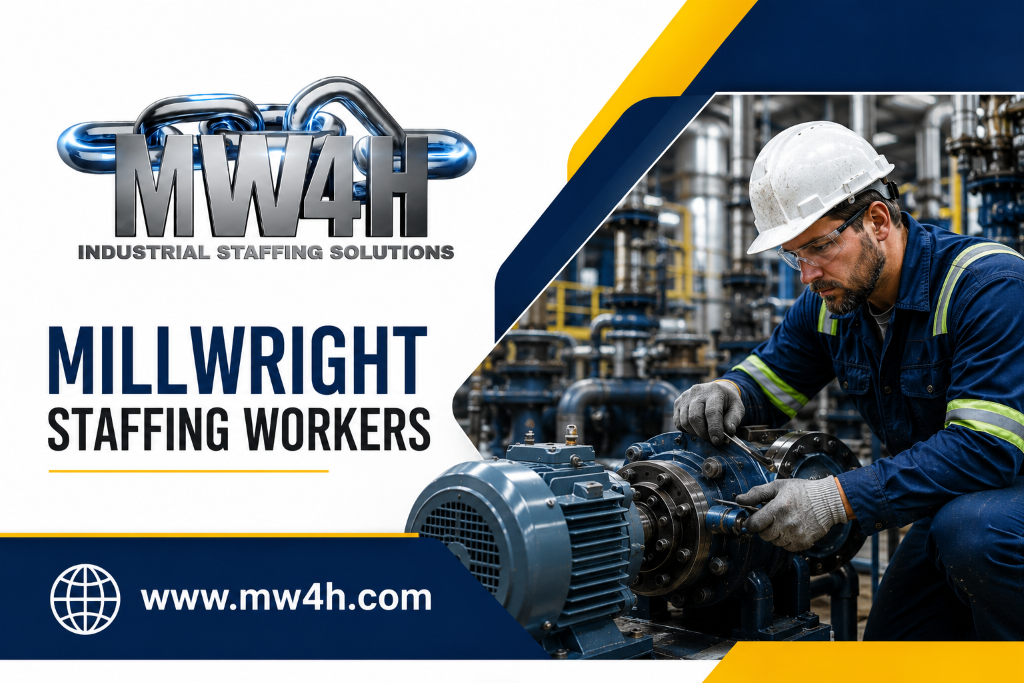
It is worth being specific here, because the value is concrete. A qualified conveyor millwright is not just someone who has worked around conveyors. They are trade-certified specialists trained in the installation, alignment, troubleshooting, and repair of industrial mechanical systems, with conveyor equipment representing a significant portion of their hands-on experience.
There is a kind of knowledge that lives in a person's hands and ears, not in a manual. A skilled millwright listens to equipment. They feel vibration through a palm placed on a frame. They notice a change in a motor's pitch before any monitoring system flags it. This sensory literacy, built over years of focused work on conveyor systems specifically, gives them an early warning capability that is worth an enormous amount in practical operational terms. Problems that become expensive, extended shutdowns for a generalist crew are, for a seasoned millwright, something they caught and fixed on a Tuesday afternoon before anyone else knew anything was wrong.
Belt tension calculations. Idler roll wear pattern analysis. Head pulley lagging assessment. Take-up adjustment procedures. Splice integrity inspection. These are not generic skills. They are a specific body of knowledge that takes years to develop, and that development only happens when a person has spent significant time working on these systems directly. When a conveyor specialist arrives at a breakdown, they bring pattern recognition that shortcuts the diagnosis. They know the three most likely causes of this type of failure on this type of system. They check those first. That is why their resolution times look so different from what a generalist produces in the same situation.
A skilled millwright does not just fix a problem and walk away. They understand why it happened, and they communicate that in ways that prevent the same failure from recurring. This kind of feedback loop, built over time between a good millwright and a well-run maintenance program, is one of the most underappreciated sources of long-term downtime reduction in industrial facilities.
One of the most significant shifts that happens when Conveyor Millwright Staffing workers are properly integrated into a facility's maintenance program is the move from reactive to proactive operations. This shift sounds simple in theory, but it requires a very specific type of person to make it real in practice.
Proactive maintenance means someone is actively looking for problems before they become failures. It means walkthroughs are not just a box to check but an exercise in listening and observing, conducted by someone with enough expertise to know what normal looks and sounds like on your specific equipment. That person notices when a return idler is starting to bind, when belt edge wear is progressing faster than it should, when a drive coupling is developing play. None of these things trip an alarm immediately. They build quietly toward a failure, and the only thing that catches them early is consistent, expert attention.
Here is a realistic picture of what proactive coverage looks like from a qualified conveyor millwright on a day-to-day basis:
This is not a glamorous list. None of these tasks generate excitement or headlines inside a facility. But across a full operating year, this steady, expert attention to conveyor health has a compounding effect on uptime that shows up clearly in production metrics. Facilities that run this way consistently outperform those relying on reactive response, and the difference almost always traces back to the person walking that floor every day.
The economics here deserve a direct look, because this is where most staffing decisions go wrong. When someone in a leadership role compares the hourly rate of a specialized conveyor millwright against a general maintenance technician, they see a gap and they focus on that gap. The conveyor millwright costs more per hour. Decision made.
But that analysis is missing the most important variable. It ignores the cost of the downtime that a skilled specialist prevents or shortens. Here is a more complete picture of what that math actually looks like:
When you look at the table above, the staffing investment does not look like a cost anymore. It looks like insurance with a positive expected return. The facilities that understand this distinction, and that make staffing decisions based on total operational cost rather than wage rate comparisons, are consistently the ones running the tightest, most reliable operations.
At Millwrights4Hire, placements are structured to reflect this understanding. The goal is never simply to fill a position. It is to match the specific depth of experience and background needed for a particular facility's systems and production demands, so that the investment delivers maximum return in uptime and operational stability.
One of the practical realities of running an industrial facility is that production volume and maintenance demands are not constant throughout the year. Peak seasons bring higher throughput and increased wear on conveyor systems. Planned shutdowns create concentrated windows for intensive maintenance and component replacement. Expansion projects bring temporary complexity. A staffing model that cannot flex with these realities creates its own problems, either leaving you paying for coverage you do not need or scrambling to find qualified help when demand spikes.
This is where a relationship with a specialized staffing partner like Millwrights4Hire creates real operational leverage. Instead of being locked into fixed headcount that never matches actual need, facilities can scale their millwright coverage intelligently. During a planned shutdown, bring in a larger team of specialists to work through every conveyor in the facility, completing inspections, alignments, belt changes, and component replacements in a compressed, efficient window. That kind of intensive work, done properly during planned downtime, is what buys months of clean, reliable operation afterward.
During normal production periods, one or two dedicated specialists provide the consistent preventive maintenance presence that keeps those systems running between major service intervals. The ability to expand and contract that coverage as operational needs shift is something a rigid in-house team structure typically cannot offer.
There is a dimension of value in millwright staffing that cannot be quantified on a spreadsheet but that every experienced maintenance supervisor feels deeply: the value of a person who truly knows your specific equipment.
A millwright who has been working in your facility for several months knows things that no outside technician can know. They know that the take-up on line four needs tension checked more frequently than the manual suggests because the load profile is heavier than the original design anticipated. They know the motor on the incline conveyor in the east bay runs warmer than it should and that it needs close monitoring during summer heat. They know the repair history of every major component, which parts have been replaced recently, and which sections of belt have been spliced and may be approaching end of useful life.
This institutional knowledge is not just background information. It is active protection. When that millwright notices something behaving differently from how they know it normally behaves, they respond with accuracy and confidence rather than uncertainty. Warning signs that a newcomer might dismiss get flagged appropriately. Emerging problems get addressed before they become production emergencies.
The practical implication is that the longer a skilled millwright works with your equipment, the more valuable their presence becomes. The fourth month is better than the first. The first year is better than the fourth month. This is why Conveyor Millwright Staffing workers placed through Millwrights4Hire tend to produce the best long-term results when placements are treated as ongoing relationships rather than temporary fill-ins.
Not every staffing provider is equipped to deliver on this kind of specialized need. Many general industrial staffing agencies do not have the trade knowledge to have meaningful conversations about conveyor-specific experience, to distinguish between a millwright who has spent years on flat belt systems in food processing versus one whose background is primarily in heavy mineral handling, or to understand why that distinction matters for a particular facility.
When evaluating a staffing partner for this work, there are a few things worth looking for closely. Deep trade knowledge is not negotiable. The people making placements need to understand what they are placing. A strong, verified network of millwrights with documented conveyor-specific experience matters more than a large general candidate pool. The ability to move quickly when a facility has an urgent coverage need is critical, because downtime does not schedule itself. And ongoing support after placement, to ensure the fit is actually working and producing results, separates a vendor relationship from a genuine partnership.
These are the standards that Millwrights4Hire holds itself to on every engagement. The team understands that a Conveyor Millwright Staffing workers placement is not a transaction. It is a solution to a real problem that has real financial consequences, and it deserves the care and expertise that reflects that weight.
Everything you need to know about Conveyor Millwright Staffing.

































Reach out for staffing solutions or inquiries. We are here to assist you with your needs across various industries.